The longer I’ve worked in digital advertising, the more I’ve realized something important: Most business owners look at Google Ads completely differently depending on their experiences, frustrations, and what stage of growth they’re currently in.
Some believe Google Ads are a waste of money. They rely on referrals, social media, and word of mouth, and honestly, those channels can absolutely work.
Others are already investing in Google Ads but feel frustrated because leads are inconsistent, reporting feels confusing, and the results never seem stable month to month.
Then there are businesses already getting leads and feeling fairly happy with performance, without realizing they may only be unlocking a small fraction of what their budget could actually produce.
What’s interesting is that each of these businesses is usually facing a completely different problem behind the scenes. And after years of working across marketing, web development, analytics, and conversion systems, I’ve realized many businesses are not necessarily making bad decisions. They’re simply working with incomplete visibility into what’s actually affecting performance. That’s where things start to change.
I understand why some business owners feel this way. If referrals and word of mouth are already helping your business grow, it can feel unnecessary to invest in advertising.
But what makes Google different is intent. Google remains one of the strongest lead generation platforms simply because people are actively searching for solutions every day. Google now processes more than 5 trillion searches annually, and AI-powered search continues to expand the way people search online.
Even capturing just 0.0001% of those searches would equal roughly 5 million searches. Now imagine even a small fraction of relevant people discovering your business while you sleep. What could that level of visibility and intent do for your business?
This is where I see many businesses get stuck. The pattern usually looks the same.
Leads stay inconsistent. Sometimes only a few come in, sometimes none at all, and business owners are left wondering where all the money went. So they increase the budget hoping to generate more results, only to see the same performance continue, or in some cases, even worse than before.
I also often see businesses running multiple types of Google Ads campaigns without a clear strategy behind them. Instead of working together, campaigns end up competing against each other, splitting budgets, confusing targeting signals, and reducing overall performance without the business even realizing it.
This is the stage that’s often the hardest to notice. Because when campaigns are already generating leads, businesses assume things are optimized but digital advertising has changed dramatically over the past few years.
One of the main challenges today is how quickly privacy and tracking policies are changing across digital advertising. Apple’s iOS updates now give users far more control over app and website tracking, while browsers like Safari block third-party cookies by default. Google and Android are also moving toward stronger privacy protections and reduced tracking across digital platforms.
And honestly, this is great for users because people should have more control over their privacy online. But for businesses, it also means less visibility into customer behavior, weaker retargeting data, and less accurate reporting. And with mobile devices now accounting for roughly 60% of global web traffic, plus millions of desktop users running ad blockers, businesses today need to build advertising strategies and systems with these limitations in mind.
This creates a much bigger issue: Businesses are making decisions from incomplete data.
They continue running the same campaigns and increasing their budgets simply because “they seem to be working,” while lacking clear visibility into where leads are actually coming from, what users are doing after clicking, or where opportunities are being lost throughout the customer journey.
And if the reporting is weak, where do you even begin improving?
That is why modern Google Ads performance is no longer just about launching campaigns. Businesses today need to understand:
Because the businesses improving consistently every month are usually not guessing. They are making decisions from better systems, better reporting, and better data.
We have been working with a dental company for the past two years that was previously partnered with one of the top marketing agencies in Winnipeg.
When we took over the account, the ads were already running and leads were already coming in. On the surface, everything looked fine.
But once we audited the entire system behind the campaigns, we found major gaps across conversion tracking, reporting accuracy, landing page performance, retargeting, and ongoing optimization. The system behind them was not fully built to maximize what the ad budget could actually produce.
This is what they were getting before:
Conversion Breakdown:

After restructuring and optimizing the full ecosystem surrounding the campaigns, performance within a similar advertising spend looked very different:
The result:
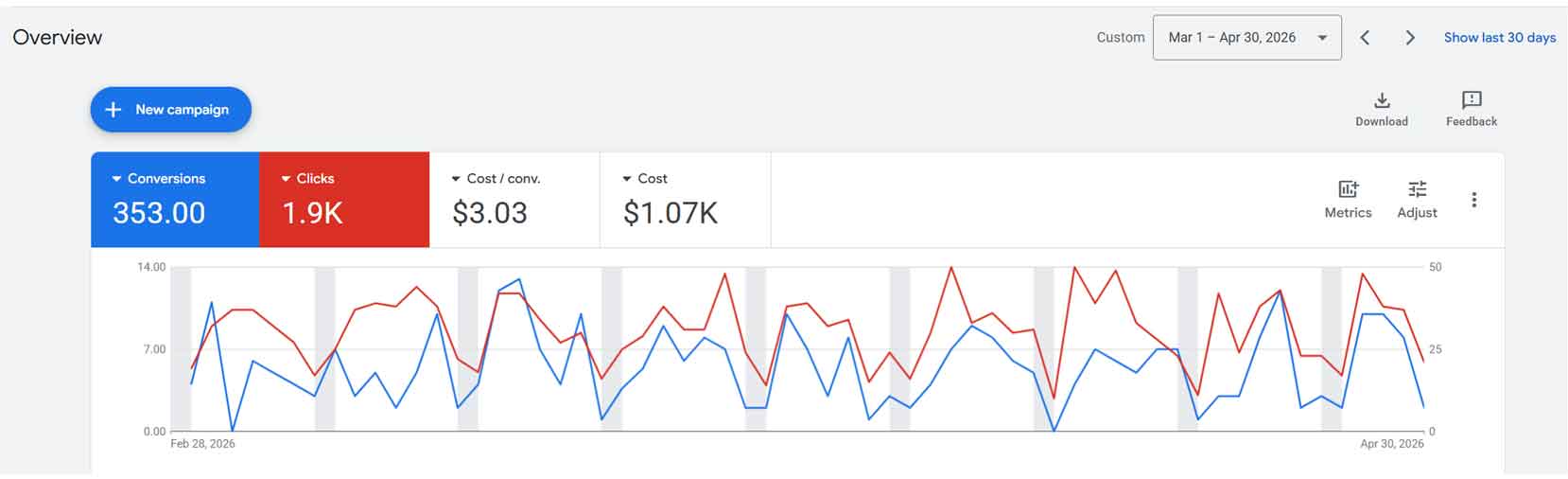
What stood out to me even more wasn’t just the increase in leads. It was the quality of engagement behind them.
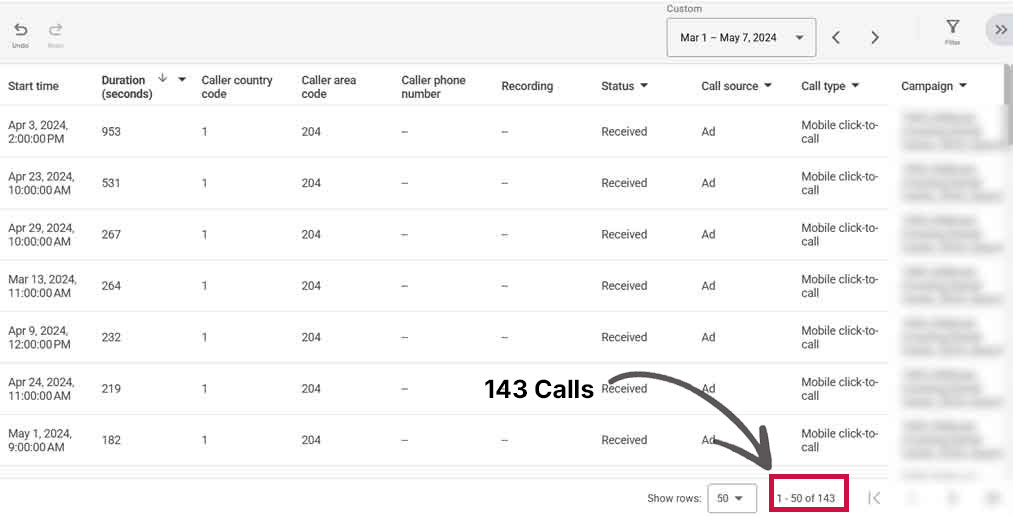
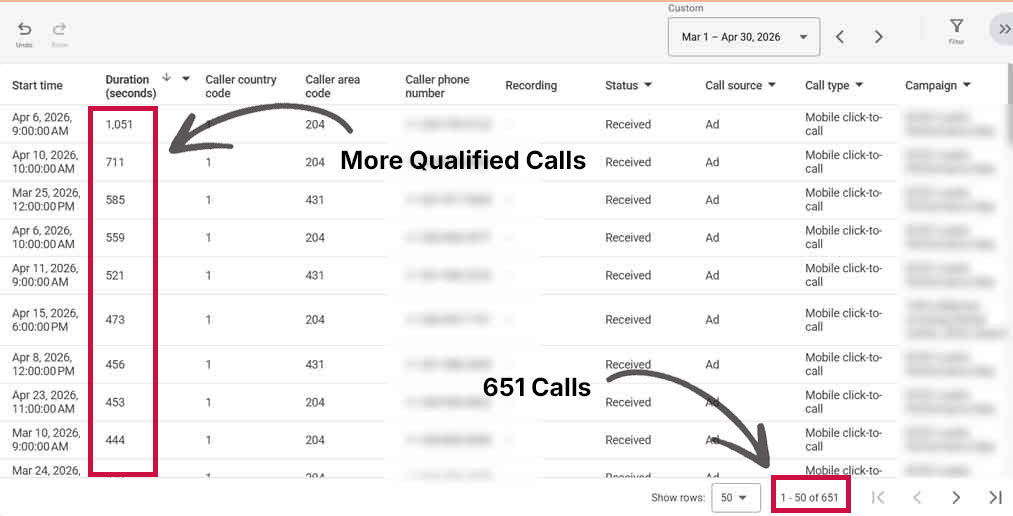
Calls became longer. Conversations became more qualified. The traffic became far more intentional, with significantly less low-quality traffic and bot activity. That’s the difference between simply generating clicks and building a system designed to attract the right people from the start.
Below was the call performance data before we came in and rebuilt the system.
And below was the call performance data after restructuring and optimizing the campaigns, tracking, targeting, and overall customer journey.
As founder of Nexvo Solutions, this is exactly why we exist today.
We want to help professional service businesses navigate the frustrations of digital advertising, inconsistent results, and not fully understanding where their marketing dollars are actually going.
Because real growth rarely comes from simply running more ads, spending more money, or chasing the next trending post. It usually comes from building smarter systems behind the business that make marketing perform better as a whole.
So the real question is: Which stage is your business in right now?
Wherever your business is today, I hope this gave you a different perspective on how modern digital advertising actually works behind the scenes.
If you feel like your business may be leaving opportunities on the table, I’d love to connect. Visit our Growth System page or schedule a free 30-min strategy call with me.